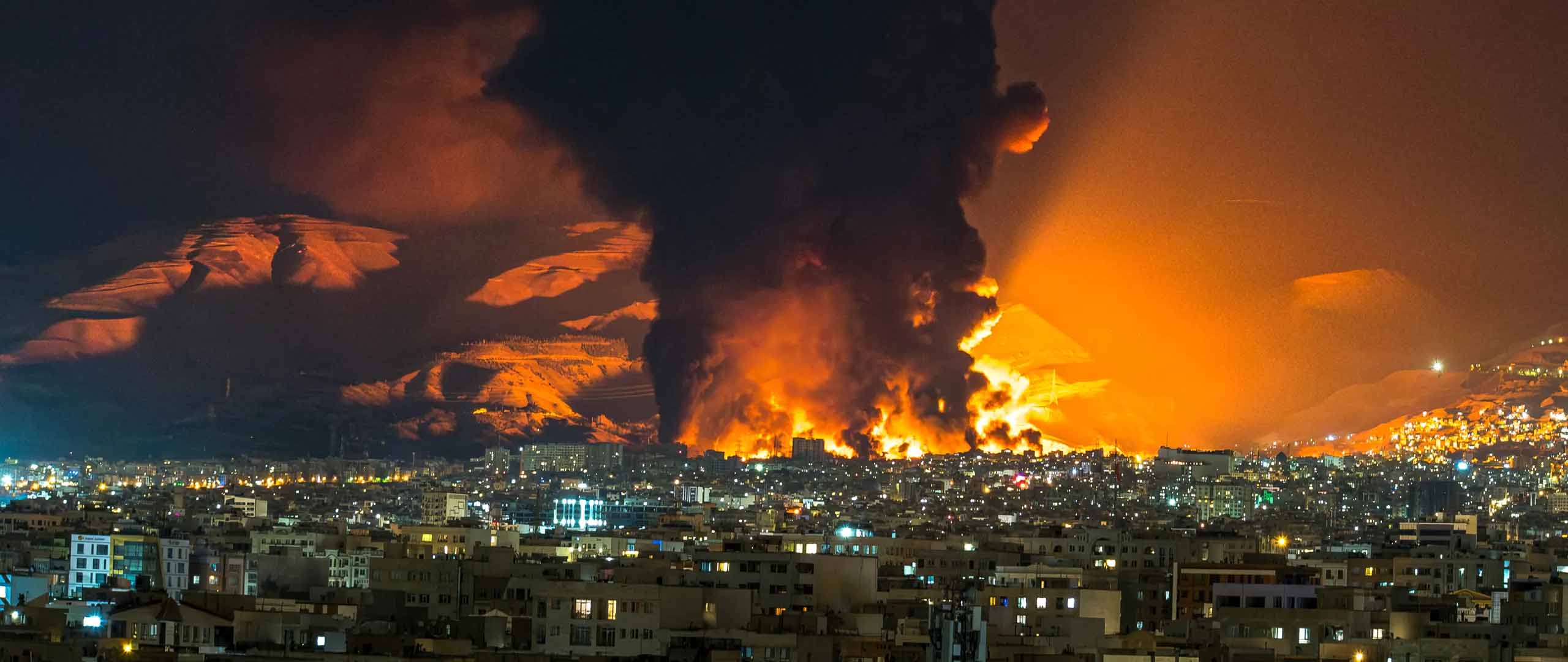
Geopolitical headlines are designed to compress time. A complex, evolving situation gets reduced to a flashing alert, and investors feel pressure to do something immediately. The current Iran Middle East conflict is a good example. The headlines are loud, the implications are real, and the temptation to trade first and think later is strong.
For long-term investors, that instinct is usually the greater risk. The more useful question is not whether Iran matters to markets. It does. The better question is how Iran and correlation to the stock market work, and what that means for portfolio resilience when oil prices geopolitical risk suddenly move to the center of the conversation.
Navigating Headlines and Your Portfolio
A familiar scene has played out in many households over the past few weeks. A phone lights up with news about Iran, oil, or military escalation. A portfolio app gets opened moments later. The brain skips straight from uncertainty to action.
That is understandable. It is rarely helpful.
Periods like this test temperament more than intelligence. Investors do not need perfect foresight. They need a process that can absorb stress without forcing emotional decisions. That is especially true in episodes of market volatility 2025 and beyond, when geopolitics and macro conditions interact in unpredictable ways.
One practical starting point is to revisit a disciplined framework for investing during market volatility. Not to react to a single event, but to confirm whether your portfolio was built for exactly this kind of stress.
The market does not require a dramatic response to every dramatic headline.
Understanding the Geopolitical Drivers
Markets are paying attention to Iran for a few clear reasons. The first is energy. Disruption risk around the Persian Gulf and the Strait of Hormuz matters because global oil pricing transmits quickly into inflation expectations, transport costs, and corporate margins.
The second is duration. A brief shock is one thing. A conflict that broadens through proxy channels, threatens shipping routes, or reopens nuclear concerns is different because it can keep uncertainty elevated long after the initial event.
Why U.S. markets still care
A common misconception is that U.S. markets should be insulated because the United States is a net oil exporter. That is not how oil works in practice. As noted in this discussion of U.S. markets and Iran-driven oil shocks, global pricing still feeds into domestic energy costs and inflation, which can raise index volatility and shift leadership toward defensive sectors such as healthcare over more cyclical areas.
For investors trying to separate signal from speculation, political scenarios also matter. A resource like this Iranian regime stability forecast can be useful, not as a trading tool, but as one way to frame the range of possible political outcomes behind current market pricing.
Short-Term Tremors and Asset Flows
In the short run, markets tend to react through a few transmission channels at once. Oil moves first. Then investors reassess inflation, growth, and policy. That often drives demand for safe haven assets such as gold, U.S. Treasuries, and the U.S. dollar, while adding pressure to broad equity indices.

The recent tape reflects that pattern. Following the escalation of the Iran conflict in early 2026, the S&P 500 declined approximately 3.7% and Brent crude traded around $111 per barrel, according to TradingEconomics coverage of Iran’s stock market and related market impacts. That is meaningful volatility, but it is not the kind of indiscriminate collapse many investors fear in the first hours of a geopolitical event.
What to watch in the near term
- Energy first: Oil often acts as the fastest market signal because supply fears are immediately tradable.
- Defensive rotation: Gold, Treasuries, and cash-like assets can attract flows when headline risk rises.
- Equity leadership changes: Energy and defense may hold up better than growth-sensitive or rate-sensitive segments during the initial uncertainty window.
Short-term price action often says more about positioning and fear than about long-term value.
Geopolitical Shocks in Historical Context
Investors often treat each Middle East crisis as unprecedented. In one sense, every episode is unique. In another, the market’s basic pattern is familiar. Initial repricing is common. Durable impairment is far less common unless the shock changes growth, inflation, or credit conditions in a lasting way.
Iran matters here not only because of oil, but because its own market has become more connected to the outside world over time. Research on the Tehran Stock Exchange shows that its correlation with international indices shifted from -0.5732 between 2000 and 2003 to 0.3093 between 2005 and 2009, indicating greater integration with global markets, as detailed in this Tehran Stock Exchange correlation study.
The lesson most investors miss
That change in correlation matters because it challenges an old assumption that Iran sits outside the financial system in a way that limits transmission. It does not. Shocks can now travel through more channels than many investors realize, especially when energy markets, regional sentiment, and international risk appetite move together.
A broader review of prior crises also helps. For perspective, this history of stock market crashes and recoveries is useful because it reminds investors that the first move is not always the lasting one.
Three Scenarios for Markets and Oil Prices
A prudent investor does not need a single forecast. They need a framework. Today, three market paths are worth watching.

Contained tension
In this path, the conflict remains serious but localized. Oil stays sensitive, risk assets remain uneven, and inflation concerns linger without fully resetting the macro outlook. Volatility stays elevated, but markets gradually adapt.
Broader escalation
This is the scenario that would matter most for valuations. A longer disruption to energy flows or a widening regional conflict would raise pressure on inflation expectations and complicate central bank decisions. It would also increase dispersion across asset classes and managers.
That dispersion is already visible in alternatives. During the volatility of March 2026, global hedge funds suffered significant drawdowns, yet systematic long/short strategies still generated alpha returns of 1.07%, according to Goldman Sachs client commentary reported by Investing.com. For wealthy families, that is a reminder that manager structure can matter as much as market direction.
Diplomatic de-escalation
If tensions cool, part of the current oil risk premium could fade. That would likely support a more constructive tone for equities, particularly in sectors that struggle when inflation expectations rise.
Portfolio Resilience and Long-Term Strategy
For wealth management geopolitical risk, the objective is not to guess the next headline. It is to own a portfolio that can function across several headlines without forcing you into a bad decision.
That usually means reviewing exposures, not reinventing them.
Practical portfolio considerations
- Energy and real assets: In response to oil shocks like the 2026 Iran conflict, tactical adjustments for high-net-worth portfolios can include rotating 10-15% into energy ETFs such as XLE and gold such as GLD when WTI exceeds $95, with backtests suggesting 5-7% annualized alpha over 6-month horizons, according to this analysis of oil shock portfolio adjustments.
- Fixed income as ballast: The same research notes that sharper bond and oil reactions can justify reducing duration and leaning toward value cyclicals rather than adding broad risk.
- Risk framing: If you want a clean definition of what a Drawdown represents, it is a useful lens for evaluating whether current discomfort is within the bounds your plan anticipated.
A well-built allocation should already account for shocks, inflation surprises, and temporary correlation spikes. This is also a good moment to revisit broader asset allocation strategies for a volatile market, especially if your portfolio has drifted away from its intended balance.
A true test of a long-term investing strategy is not whether it avoids uncertainty. It is whether it can withstand it without requiring panic.
If the current Iran Middle East conflict has prompted questions about portfolio resilience, risk exposure, or long-term positioning, Commons Capital can help you evaluate your plan with the discipline and clarity that periods like this demand.